

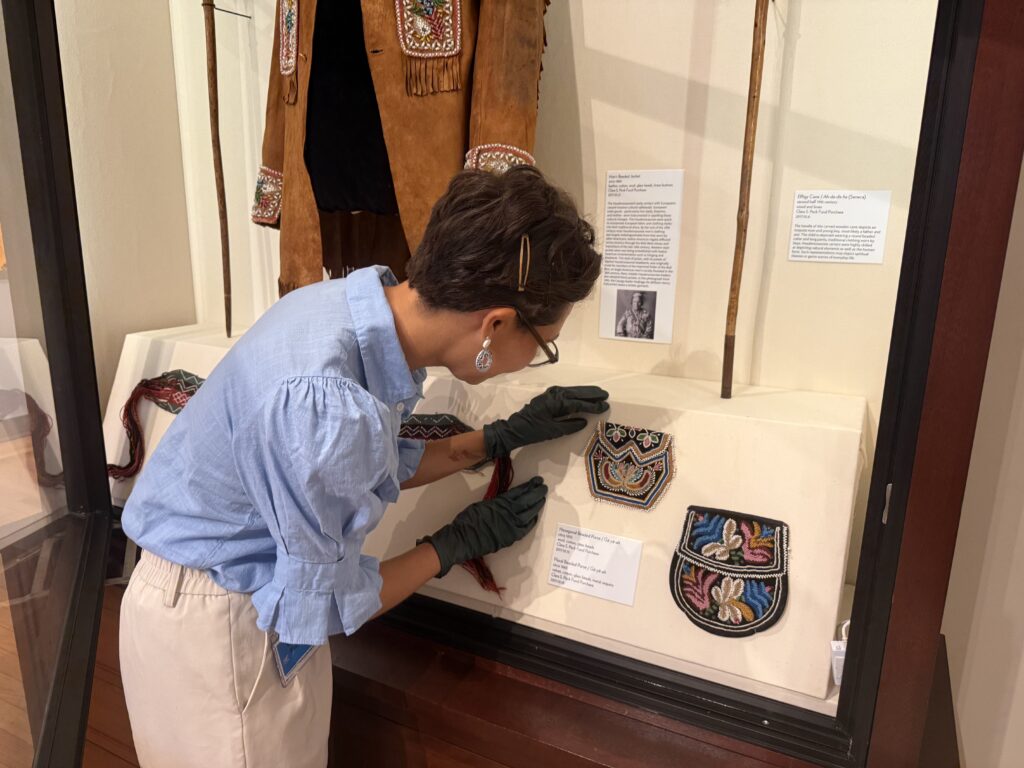
Working alongside the Curatorial Department, Gabrielle Patrone joined The Rockwell Museum this season as the second Mary Spurrier Fellow in Native American Art.
Gabrielle worked to examine Haudenosaunee beadwork—a critical part of The Museum’s collection—to support her graduate capstone project. She is currently a second-year MA Candidate in Art History at Syracuse University, and she earned a BA in Art History and a BFA in Painting from Rhode Island College. She also completed a Fulbright Independent Research Fellowship studying Métis Nation beadwork and Indigenous-centered curatorial praxis in Ottawa, Ontario.
Through her work this summer, Gabrielle has helped illuminate many obscured stories, supporting the Museum in its role as the belongings’ current stewards. As the fellowship comes to a close, Gabrielle shared some of her insights from her time at The Rockwell.
Tell us what drew you to this fellowship.
Few institutions take the time to look closely at their Native collections—especially historical and ancestral pieces. For so long, there has been a tendency to understand these belongings, and Indigenous culture in general, through an anthropological or ethnographic lens––a product of the past. In doing so, one overlooks the immense cultural significance that the work had and still has within Native communities. The Rockwell has already made great efforts to illuminate the stories of its historic collection and celebrate the work of contemporary Native artists, so this fellowship presented a golden opportunity to continue that work.
As a second-year MA candidate, I am currently building a solid foundation of research to support my capstone thesis, which just so happens to be focused on Haudenosaunee beadwork! I knew that this fellowship would offer an invaluable opportunity to not only work hands-on with these pieces, but it would also be the first step in fostering meaningful relationships with members of the Haudenosaunee community, a critical first-step when pursuing Indigenous-centered research.
What was your research focused on?
My research was primarily focused on The Rockwell’s small but impressive collection of nineteenth and twentieth-century Haudenosaunee beadwork. These pieces fit broadly within the category of “tourist art” or “souvenir art,” beaded objects that were constructed and sold by Native women to white consumers from the nineteenth to early twentieth century. I chose to work with the Haudenosaunee collection not only because it directly relates to my graduate thesis project, but because The Rockwell is situated firmly within Six Nations territory––to me, it was important that I spend my time working with belongings directly tied to the land and people that reside here.
Did anything surprise you in your research?
I had built a decent foundation of knowledge going into the fellowship about the beadwork of this era from a term project I worked on this past spring as well as from my experience with Fulbright. However, the nature of the fellowship, which enabled me to work hands-on with beaded belongings for the first time and speak with former Rockwell curator Kirsty Buchanan and Seneca (Heron Clan) artist and curator Randee Spruce, illuminated so many new insights I never considered!
My collaboration with Randee was particularly instrumental for understanding Haudenosaunee iconography and the role beadwork plays in Six Nations communities. The opportunity to work so intimately with the beaded belongings also provided critical insights about the works’ techniques and construction, tangible findings that I would have never known about if I was only looking at photographs. For example, I was surprised to find that many of the flaps on beaded flat purses are actually false! They serve a decorative function rather than a mechanism to keep the bags closed.
Was there a particular object you found especially interesting or felt connected to?
It is difficult to select just one object—when you are interacting with these works, they all seem to have souls that call out to you. Immediately, I was most drawn to a small hexagonal, flat-stitch purse on display in the Haudenosaunee Gallery. It is incredibly complex, utilizing a variety of exceptionally small beads that have been organized into a design I have never encountered before. Many souvenir-era beadworks follow similar design patterns and motifs, making them difficult to attribute to a single maker or locale. This bag contained many of the hallmarks of nineteenth-century Seneca beadwork: the hexagonal pattern, bead size, and stitch technique. However, the iconography on the front and back of the bag is not definitively Seneca. In conversation with Randee Spruce, it was suggested that the elaborate geometric and botanical motifs may indicate a Mi’kmaq maker or influence. The confluence of styles and designs reveals how layered Native communities are.
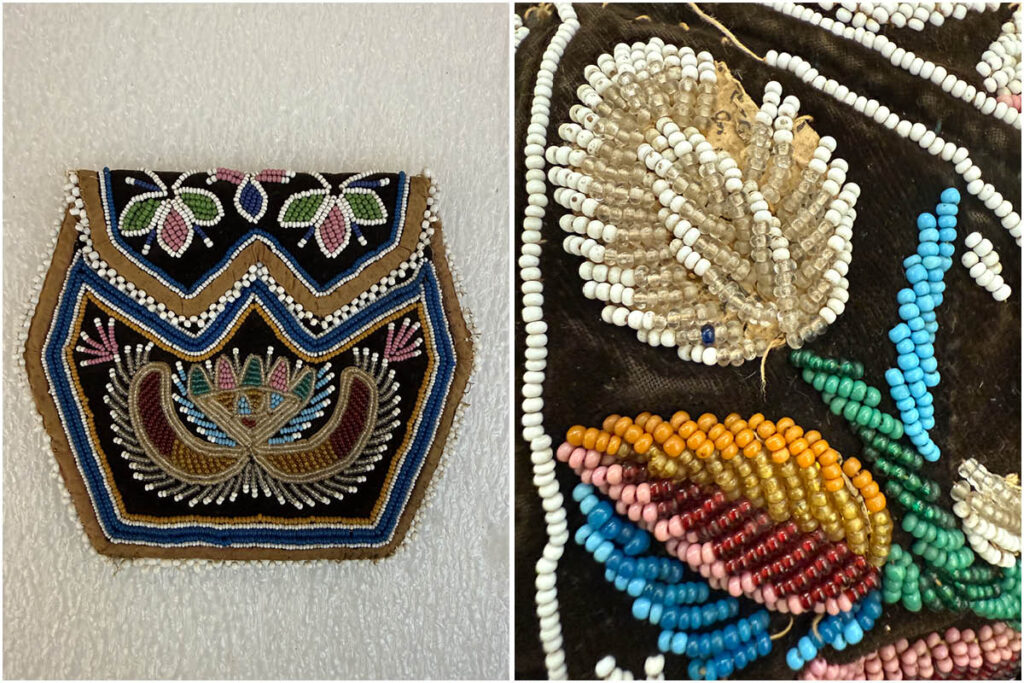
It was also exhilarating whenever I could spot a “spirit bead” ––an off-colored bead interspersed in a design. According to some Indigenous beadworkers, the seemingly out-of-place bead is an intentional reminder to both the maker and viewer that humans are not infallible and thus their creations can never be perfect. Finding them on works created so long ago reveals how creative knowledge and traditions continue to be passed down.
What other highlights from your time here would you like to tell us about?
I am grateful for the multiple occasions I was able to speak with Randee Spruce. She is an overflowing font of knowledge and has done incredible work with her community as a curator, educator, and artist. Randee’s own beadwork utilizes historic beads and design patterns, paying tribute to the women who came before her and ensuring the continuance of this art form.
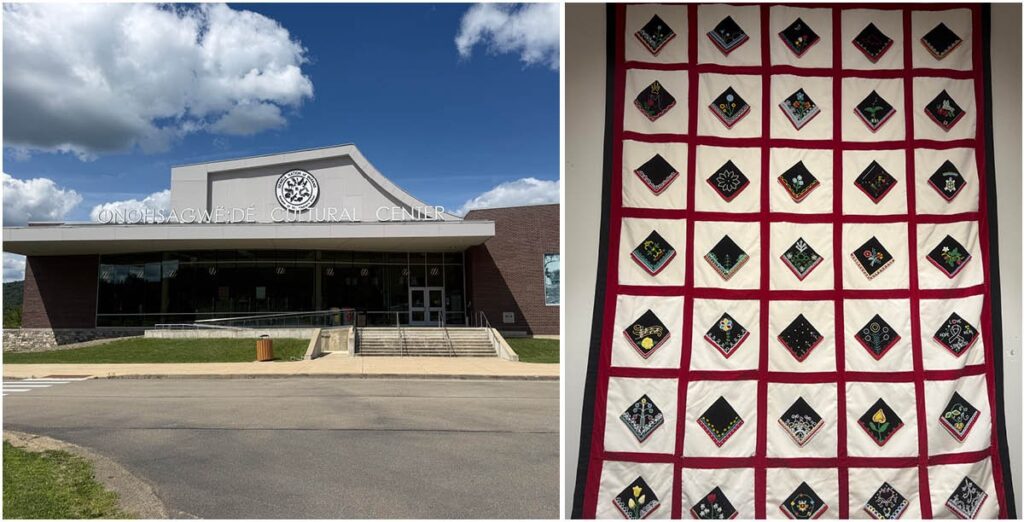
Another highlight was the opportunity to visit the Seneca-Iroquois National Museum and Onöhsagwë:de’ Cultural Center. Simply being in Seneca territory was such a valuable way to connect more deeply with and understand Hodínöhšö:nih culture and history. Studying the Center’s robust collection of ancestral and contemporary beadwork also revealed insights about The Rockwell’s collection. I hope to visit the Center again as I continue my research beyond the fellowship.
How do you hope this fellowship evolves in the future?
As the second Mary Spurrier Fellow at The Rockwell, I hope that the fellowship continues to draw in more individuals who are willing to do the difficult and important work that enables the museum to serve as responsible stewards. It is a tall order to conduct intense research in such a short time frame, but with each fellow that comes in I anticipate that we will compile a robust cache of knowledge that will provide valuable insights across The Rockwell’s collections. I hope that as the fellowship evolves, it will generate more opportunities for the museum and fellows to collaborate with Indigenous artists, curators, knowledge keepers, and community members.
I would like to extend thanks to the entire Rockwell community, especially the Curatorial Department. Their kindness and support do not go unnoticed! Thank you to Mary Spurrier for continuing to fund this fellowship and devoting resources to the research of Indigenous art. I look forward to following the evolution of this fellowship and the incredible work that comes from it!

About the Mary Spurrier Fellowship in Native American Art
This fellowship is made possible with support from Mary Spurrier, a philanthropist from Rochester, NY whose generous gift established the position in 2025. The Rockwell Museum’s Native American collection, which includes more than 470 objects gifted by Robert and Hertha Rockwell in 1976, has grown steadily over the decades with acquisitions of contemporary Native art, ensuring both historic and living traditions are represented. The Mary Spurrier Fellowship reflects the Museum’s commitment to deepening research, collaborating with Native communities, and advancing justice, equity, diversity, and inclusion in all aspects of its work.
Future postings will appear on RockwellMuseum.org/employment. To be notified about future fellowship or collaboration opportunities for the Museum’s Native American collections, interested parties can contact curatorial@rockwellmuseum.org.