
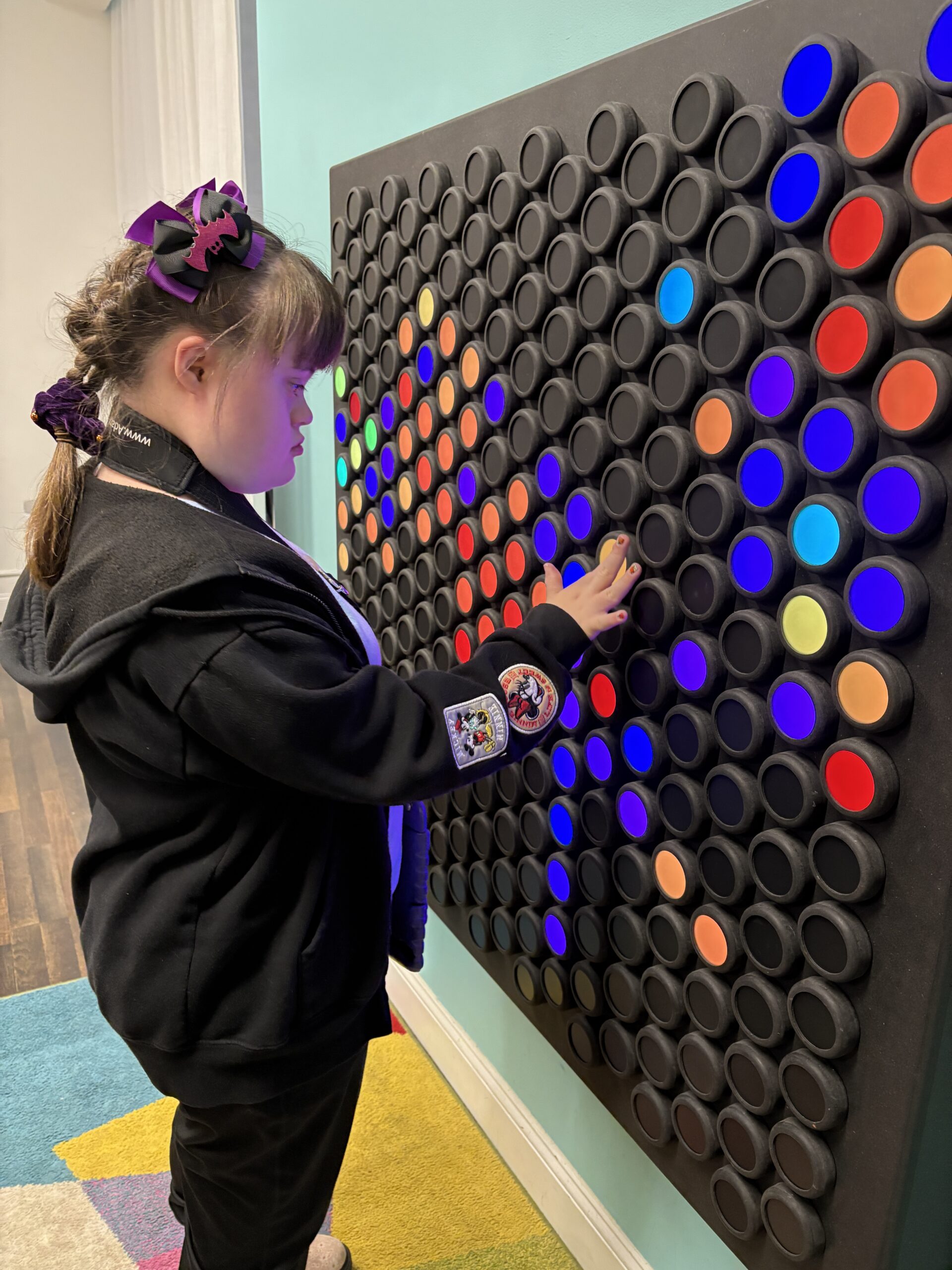

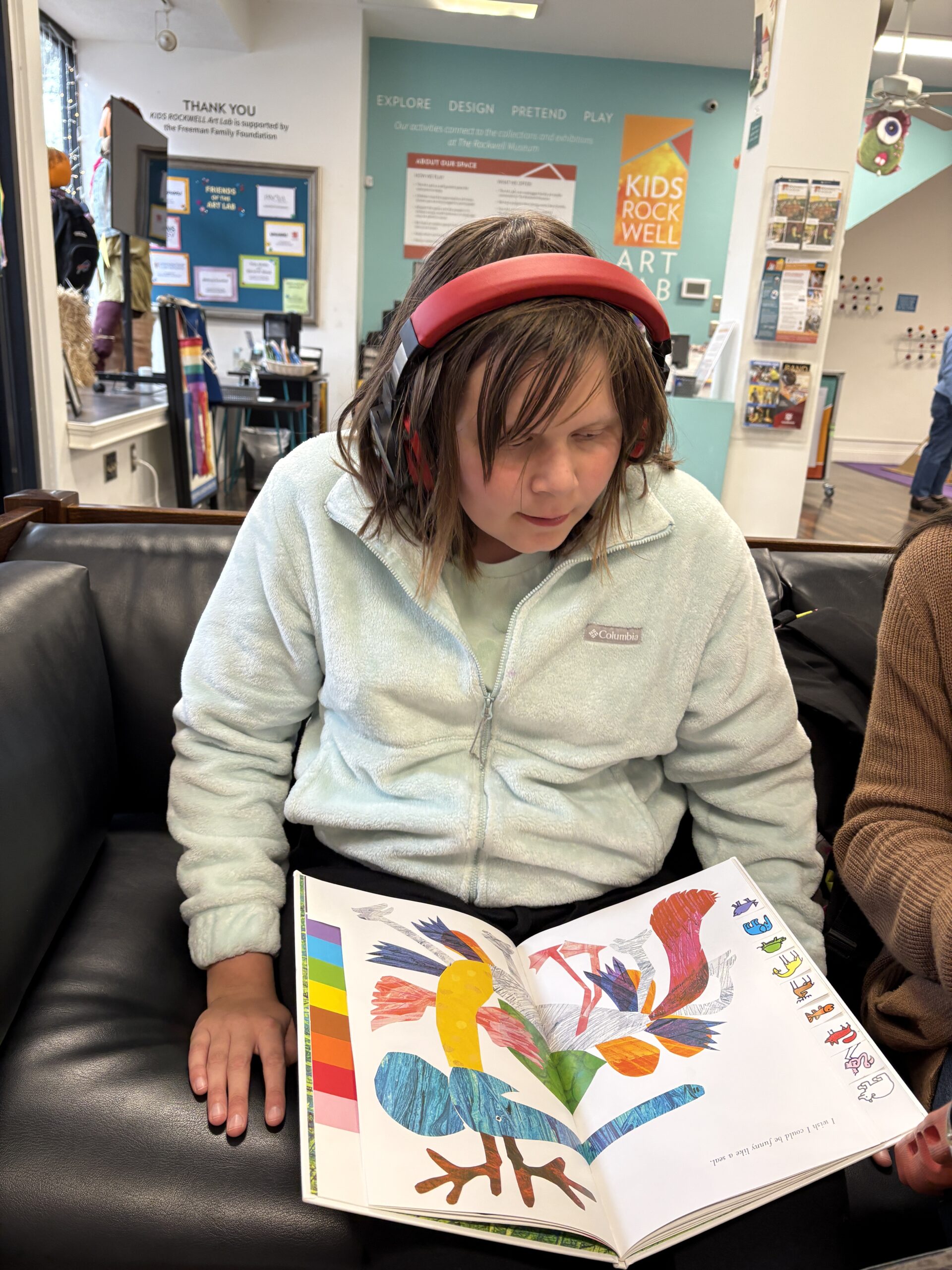
C-PP Elementary, Middle, and High School students visited The Rockwell with their art and special education teachers for a customized tour of the Museum galleries and KIDS ROCKWELL Art Lab. Students learned about art and objects made by diverse American artists. They explored various art styles and mediums by looking closely at photographs, abstract paintings, sculptural works, and Native American art. The visit included the photography exhibition Robert Weingarten: Palettes, Helen Hardin’s abstract painting Untitled: Robes, and Robert Rauchenberg’s sculpture Opal Gospel. In groups, students experienced the collection through interactive sensory exploration designed for each student’s needs.
This holistic program for students with disabilities focuses on hands-on experiences, social engagement, and flexibility in navigating the Museum environment in both the galleries and KIDS ROCKWELL Art Lab.
Class Projects:
Zoe Fabian’s middle school students viewed the special exhibition Robert Weingarten: Palettes (on view September 26, 2025- January 5, 2026). Ms. Fabian’s students then designed triptychs employing color theory. Students chose their triptych layout and then made black lines to divide the space. They explored specific color schemes, each student using a single repeating, unifying color. They used canvas palettes during each step of this process, which later became a visual roadmap of creation.
Sharron Holland’s first high school class was inspired by Robert Weingarten’s large-scale photographs of artists’ palettes featured in the exhibition Robert Weingarten: Palettes (on view from September 26, 2025- January 5, 2026). Ms. Holland’s students were challenged to see their art classroom through a new lens. Using a scavenger hunt as their guide, they explored color, texture, and abstraction in unexpected places. Each student photographed a close-up section of what they discovered, capturing the hidden beauty found in ordinary materials. By enlarging these images, the students transformed small details into powerful abstract compositions that celebrate how art can be found all around us when we learn to slow down and look.
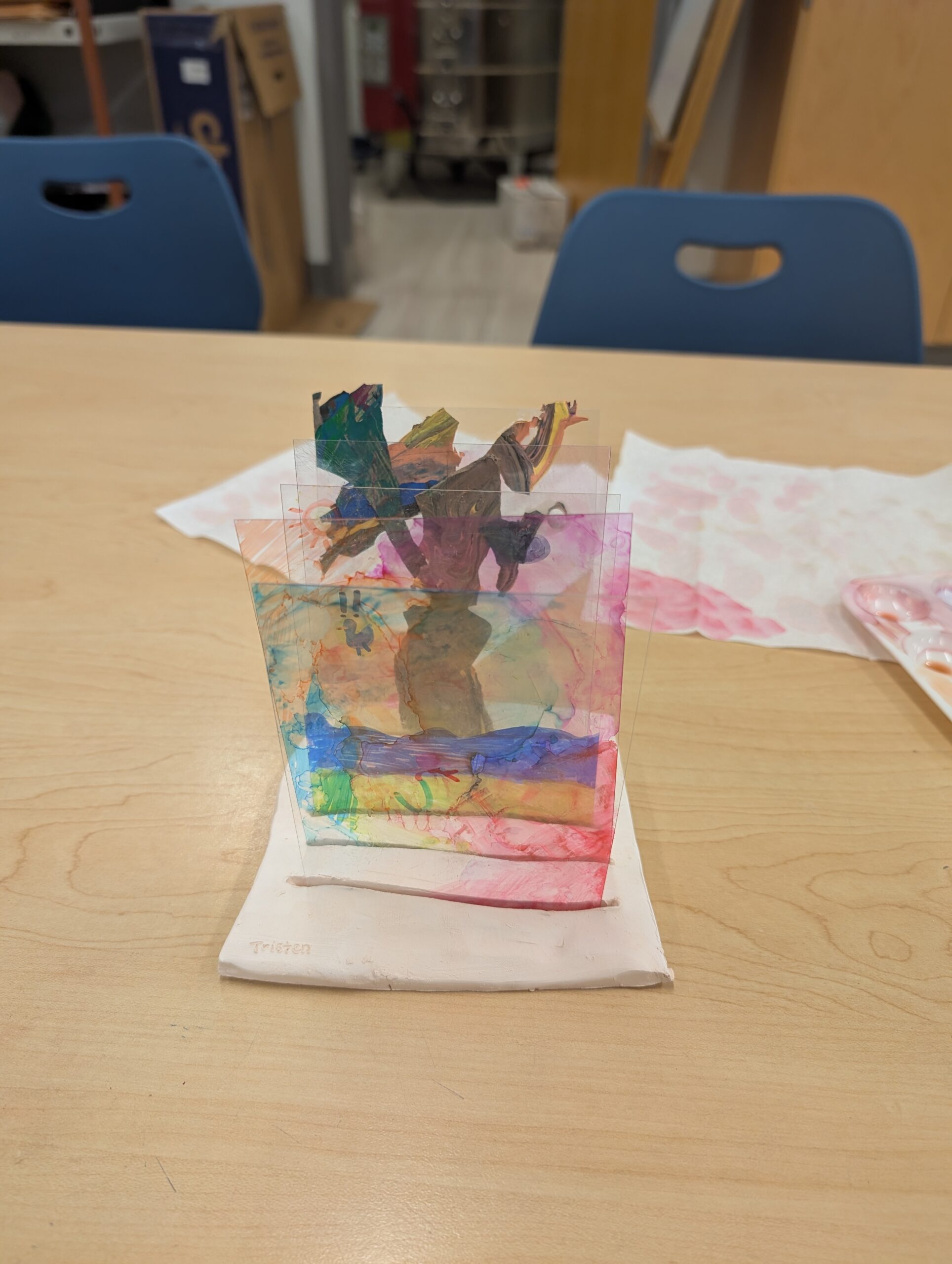
Ms. Holland’s second high school class drew inspiration from artist Robert Rauschenberg’s sculpture Opal Gospel (1971, on view in a gallery on the third floor). Ms. Holland’s students explored the relationship between image, text, and transparency to create collaborative, interactive sculptures. Rauschenberg was an American artist who became famous for using everyday objects, symbols, and mixed materials to create new kinds of art.
Each student created a unique plexiglass panel, layering personal imagery and words that express an individual theme or idea. When combined, these transparent panels form an installation that reflects both the diversity of each student’s voice and the unity of their shared creative experience. Together, the work embodies Rauschenberg’s spirit of experimentation and connection, where meaning is built through layers of expression.
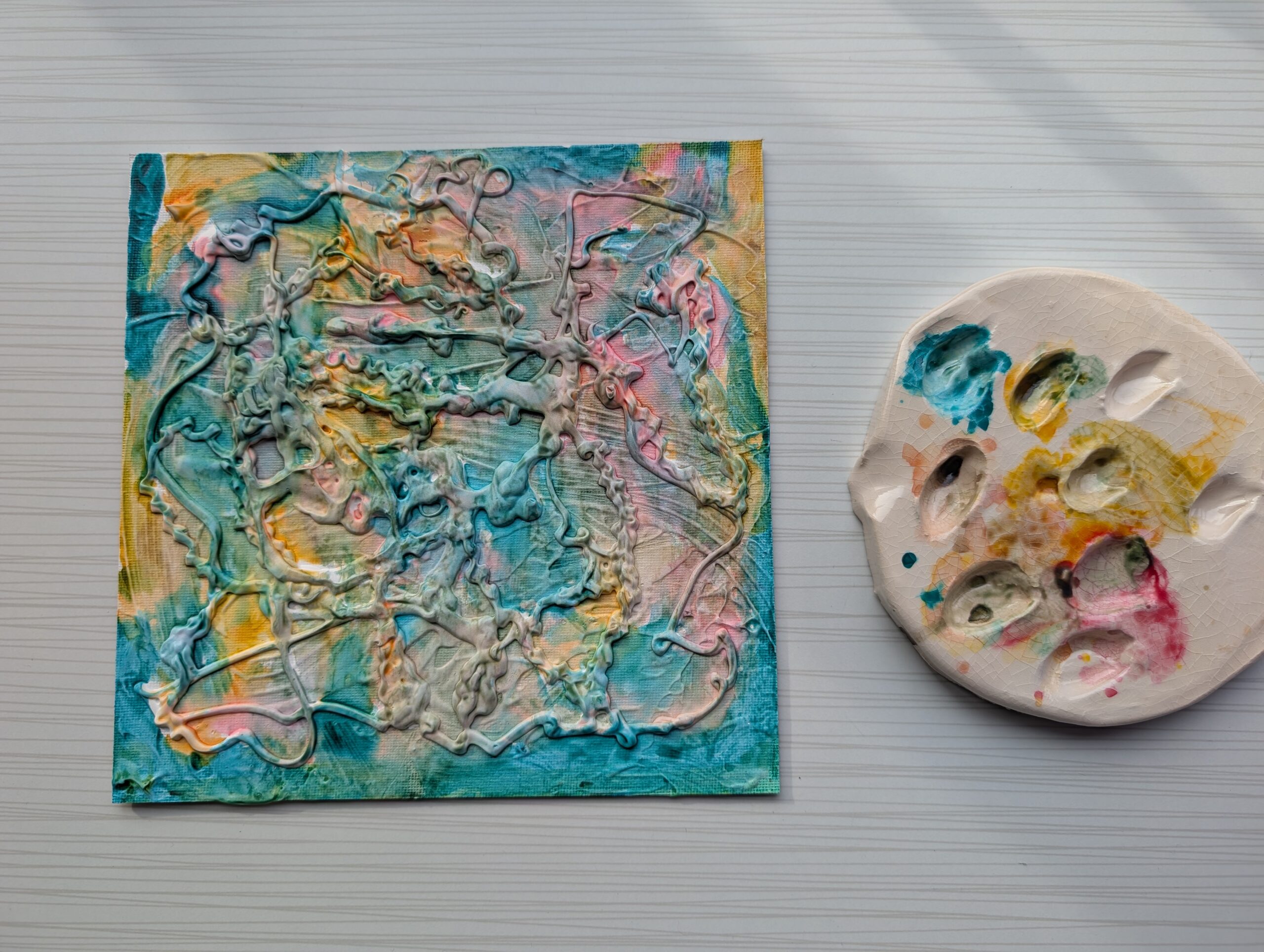
Victoria Riina’s first class at Severn Elementary School drew inspiration from Robert Weingarten’s large-scale photographs of artists’ palettes, featured in the exhibition Robert Weingarten: Palettes (on view from September 26, 2025- January 5, 2026). Each student designed and sculpted their own palette out of clay. Then, they used gesso and a variety of application techniques to build up texture on a canvas. Finally, students explored mixing watercolor paints on their palettes and adding them to the gesso base. Their palettes are works of art in their own right, equal to the finished canvases they produced.
Ms. Riina’s second class drew inspiration from artist Robert Rauschenberg’s sculpture Opal Gospel (1971, on view in a gallery on the third floor). Students began by sculpting a clay base. They then used sharpies, rubbing alcohol, gloss medium, and dried paint chips to create experimental collages on transparency film. Students were encouraged to include images of personal interests in their collages. They especially enjoyed experimenting with materials to achieve different effects, such as layering pictures and blending colors.
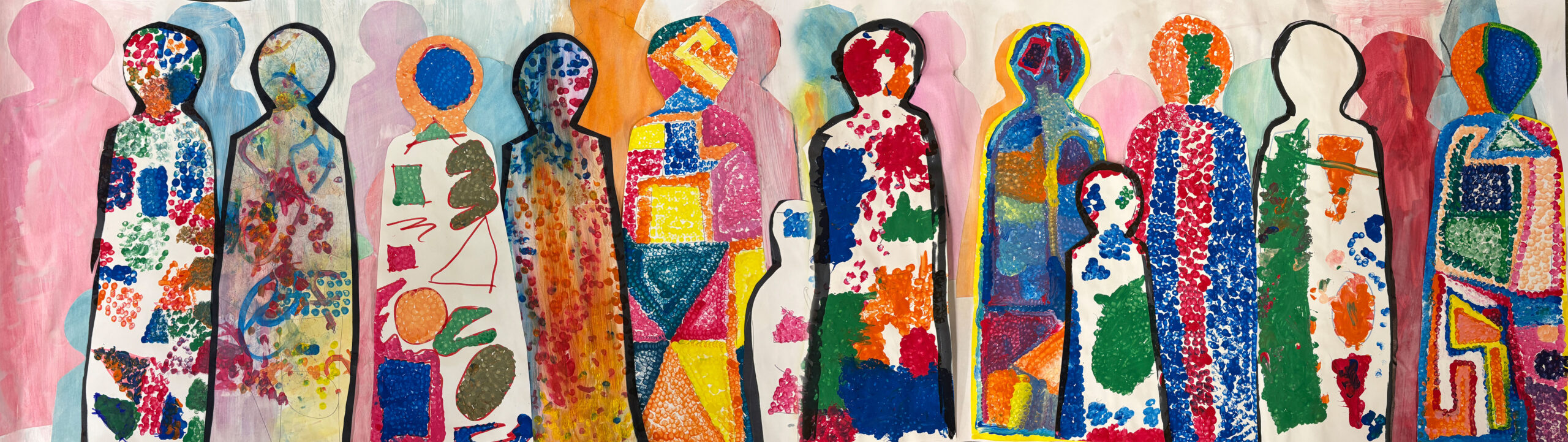
Megan Wukovitz’s high school students studied how artist Helen Hardin used bold geometric lines and layered shapes to build rhythm and movement in her painting Untitled: Robes, 1973, on view in the Southwest Lodge. Hardin was a Santa Clara Pueblo artist known for blending bright abstract designs with imagery from her family’s Native American traditions.
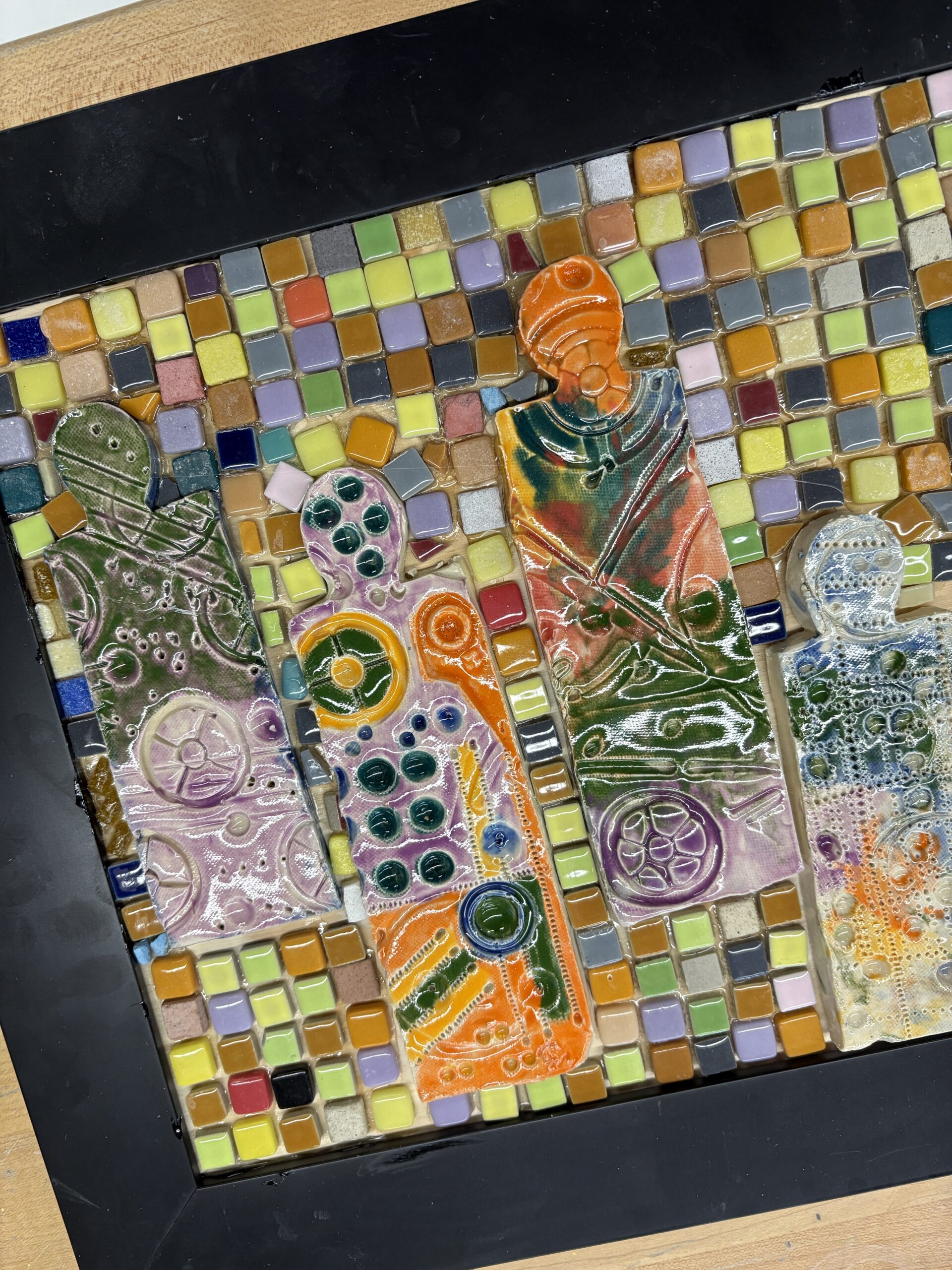
Students observed how color played an important role in expressing emotion and energy. They first designed a collaborative mixed-media collage using various painting techniques, experimenting with contrasting lines and repeating patterns to form their own dynamic compositions. This collage was then translated into a ceramic mosaic. Students used stamps and other materials to create texture on clay slabs and glazed their works with bold colors. After firing, the ceramics were combined with tiles to create a unified design that reflects both Hardin’s influence and the students’ own creativity.
This project encouraged students to explore visual storytelling through texture and design while developing their fine motor skills and an appreciation for contemporary Native American art. The finished mosaic stands as a colorful tribute to Helen Hardin’s artistic legacy and to the students’ expressive abilities.